Medicare

New & Noteworthy
Examining the Potential Impact of Medicare’s New WISeR Model

A federal initiative to establish new prior authorization requirements in traditional Medicare, called the Wasteful and Inappropriate Service Reduction (WISeR) model, is likely to have only modest impact in its first year.

State Profiles for Dual-Eligible Individuals

This data collection draws on Medicare and Medicaid administrative data to present national and state-level information on people who are covered by both Medicare and Medicaid, referred to as dual-eligible individuals (also known as dually-enrolled beneficiaries).

Data Visualization

The Facts About Medicare Spending

This interactive provides the facts on Medicare spending. Medicare, which serves 67 million people and accounts for 12 percent of the federal budget and 21 percent of national health spending, is often the focus of discussions about health expenditures, health care affordability and the sustainability of federal health programs.

Explore data on enrollment growth, Medicare spending trends overall and per person, growth in Medicare spending relative to private insurance, spending on benefits and Medicare Advantage, Part A trust fund solvency challenges, and growth in out-of-pocket spending by beneficiaries.

Related: FAQs on Medicare Financing and Trust Fund Solvency

Read More

Subscribe to KFF Emails

Choose which emails are best for you.
Sign up here

Filter

1 - 10 of 1,590 Results

  • The IRA Has Improved Coverage of Drugs Selected for Medicare Price Negotiation

    Issue Brief

    The Medicare drug price negotiation program could improve coverage of drugs selected for negotiation for Medicare beneficiaries because the law requires all Medicare Part D plans to cover each of the selected drugs, including all dosages and forms, when negotiated prices take effect.
    This analysis examines 2026 Medicare Part D formulary coverage of drugs selected for negotiation to measure the effect of the IRA's coverage requirement.

  • Examining the Potential Impact of Medicare’s New WISeR Model

    Issue Brief

    On January 1, 2026, the Center for Medicare & Medicaid Innovation (CMMI) launched the Wasteful and Inappropriate Service Reduction (WISeR) Model that establishes new prior authorization requirements in traditional Medicare. This analysis explores the potential impact of the WISeR model by examining recent spending and utilization trends in traditional Medicare for services selected for prior authorization requirements in the six model states (Arizona, New Jersey, Ohio, Oklahoma, Texas, and Washington).

  • Recent Trends in GLP-1 Use and Spending in Medicare

    Issue Brief

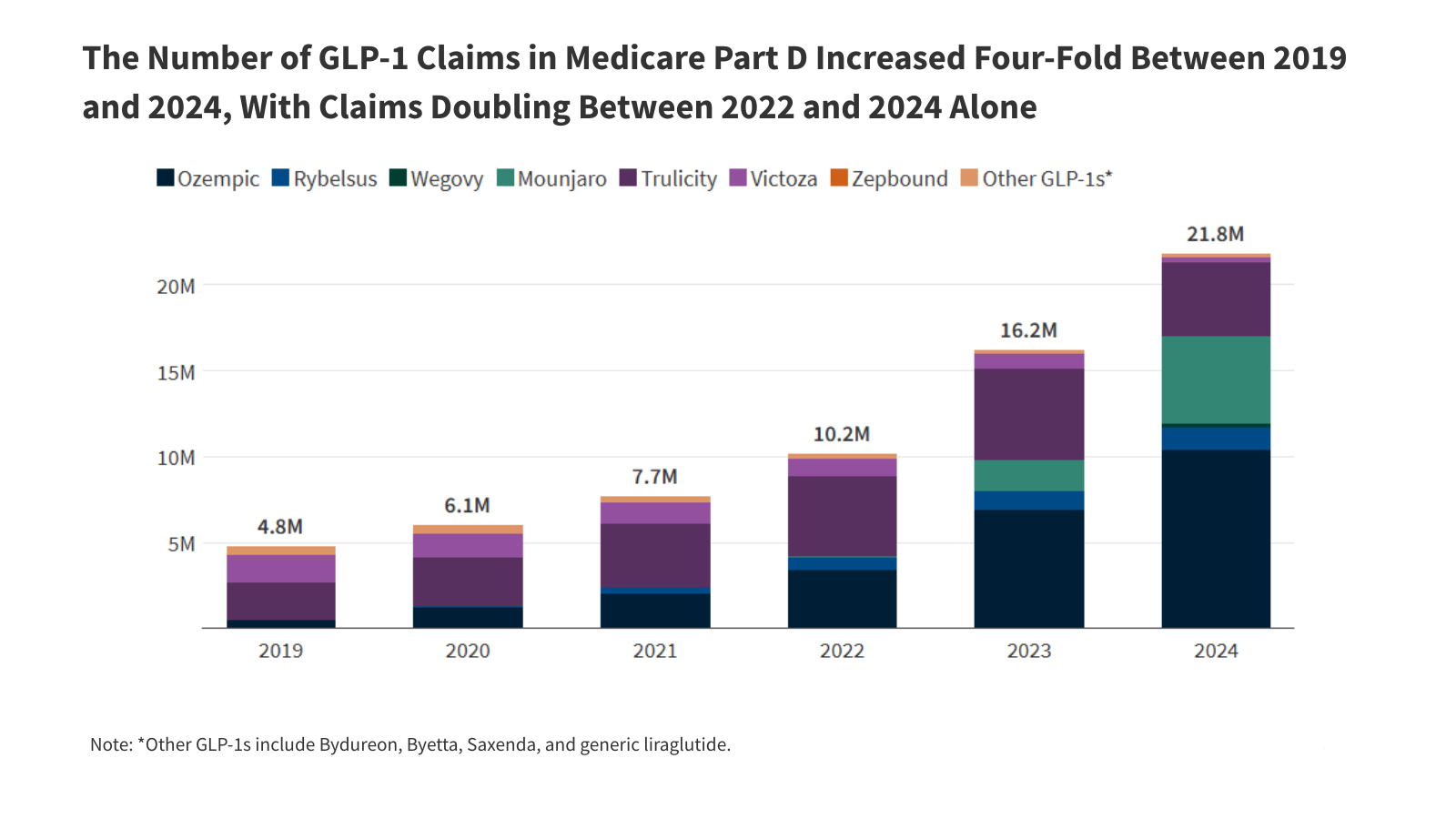
    Ahead of the Trump administration’s planned expansion of Medicare coverage for GLP-1s to treat obesity through temporary models and the availability of Medicare’s negotiated price for certain GLP-1 products beginning in 2027, this analysis examines CMS’s Medicare Part D claims data from 2019 to 2024 to document the increase in the number of beneficiaries being treated with GLP-1 drugs and the growth in Medicare spending and claims for these drugs.

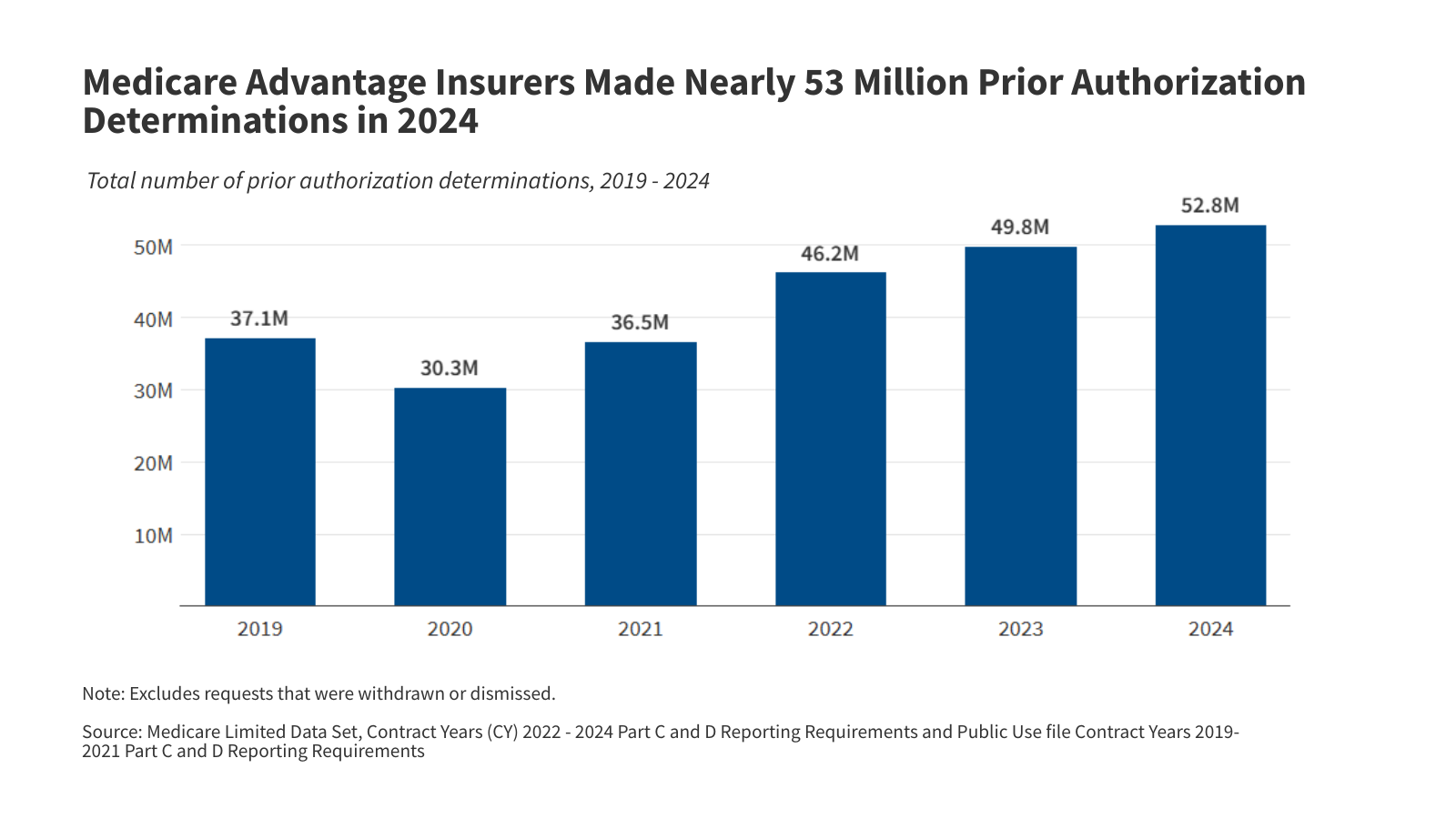
  • Medicare Advantage Insurers Made Nearly 53 Million Prior Authorization Determinations in 2024

    Issue Brief

    Nearly 53 million prior authorization requests were submitted to Medicare Advantage insurers on behalf of Medicare Advantage enrollees in 2024, of which 4.1 million (7.7%) were denied. Just 11.5% of denied requests were appealed, though 80.7% of appeals overturned the initial denial in Medicare Advantage. Substantially fewer prior authorization requests were made in traditional Medicare, reflecting the small number of services subject to prior authorization requirements.

  • New Trump Administration Proposals Would Further Limit Gender Affirming Care for Young People by Restricting Providers and Reducing Coverage

    Issue Brief

    This brief examines two proposed federal rules that would further restrict youth access to gender affirming care. One rule would change the hospital Conditions of Participation (CoPs) which would prohibit most Medicare and Medicaid enrolled hospitals from providing certain types of gender affirming medical care for young people and the other would prohibit federal Medicaid or CHIP funds from covering this care. The rules have a 60-day comment period, do no take immediate effect, and are expected to face litigation, if finalized.